
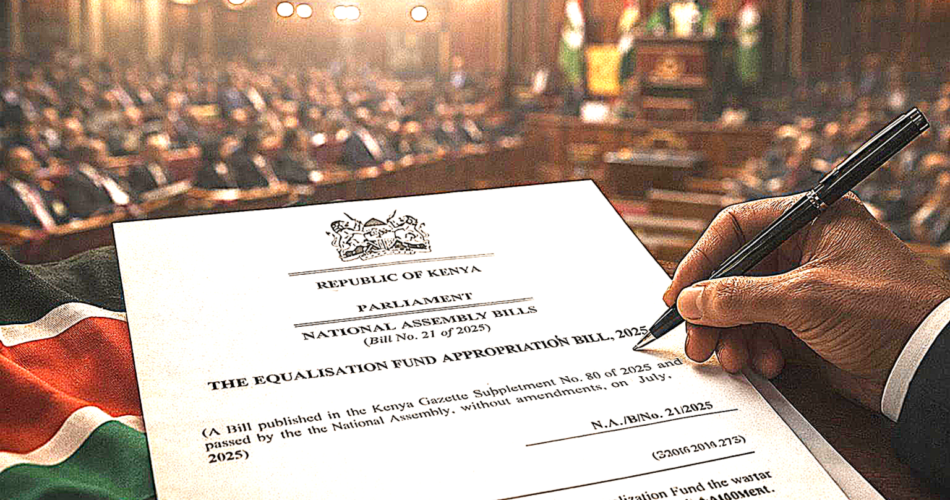
Summary of the bill:
This law will see allocation of 16.8 billion shillings to specific regions for the 2025/2026 financial year. It was deemed to be in effect from July 1, 2025. See it here
Its purpose is to provide essential funding for basic services such as water, roads, health facilities, and electricity in areas identified as marginalized. And have funds distributed directly to the beneficiary counties and their respective constituencies.
Let’s follow the money in the Equalization Fund Appropriation Bill, 2025.
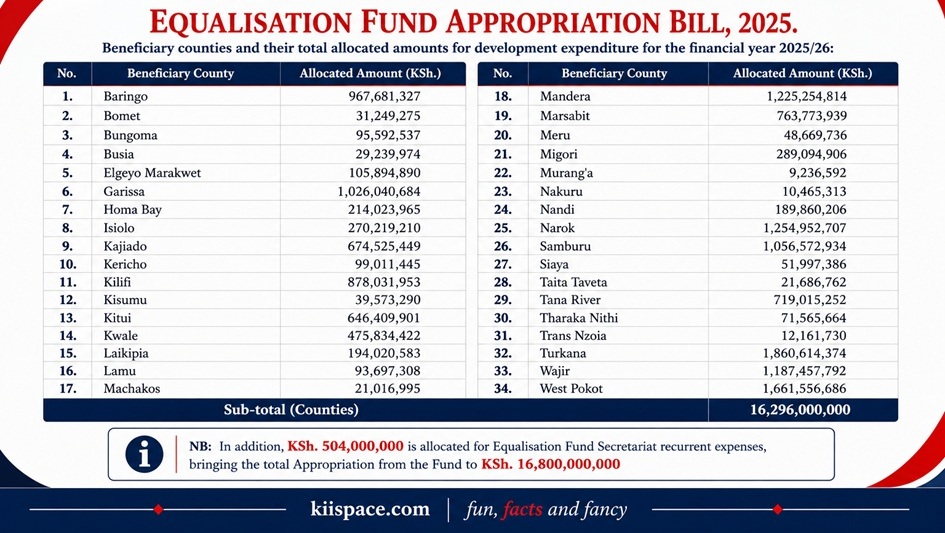
The law provides a legal framework for how these funds are withdrawn, managed through special purpose accounts, and overseen by the Controller of Budget.
The funds will have multiple approvals, that is;
- Controller of Budget
- National Treasury
- Equalisation Fund Advisory Board
The Good Stuff:
✅ There will be direct funding of water, roads, health facilities, and electricity. for marginalized constituencies like Turkana.
✅ Funds will be kept in special-purpose accounts at the Central Bank of Kenya, to allow tracking and prevent diversion to other county priorities.
✅ This law specifies that project approvals remain in force until they’re completed, even if they extend beyond one financial year.
✅ It will equalize development across the country.
✅ The law breaks down funding by constituency, which will ensure resources reach specific local communities rather than being stuck at the county headquarters.
✅ Investments in counties currently inaccessible, can boost the economy by opening up these regions for trade and investment.
The Cons
🚩 If you don’t live in one of the “marginalized” constituencies listed in the schedule, you do not benefit from this fund.
🚩 The multi-layered approval process required could lead to delays in project implementation on the ground.
🚩 A total of KSh. 504 million is allocated specifically for the expenses of the Equalisation Fund Secretariat; this is an insane amount of money being used for administration rather than direct service delivery.
🚩 This law sets specific amounts for each constituency. If there’s a need to change the project itself or unexpected costs are encountered, there won’t be the flexibility to move funds between regions or projects without further legislative action. This is both good and a bit restrictive.
🚩There’s a dependency risk; of course, this is Kenya, there will be abuse of this fund, e.g., continued reliance on the fund. This definitely reduces the incentive for some regions to develop their own sustainable revenue-generating activities.
Please let me know what you think!