
Christianity is a major religion today. It came from the life, teachings, and death of Jesus of Nazareth.
It is the largest of the world’s religions, the largest groups being the Roman Catholic Church, the Eastern Orthodox churches, and the Protestants. And they all celebrate easter in different ways.
Easter is determined by a mix of solar and lunar cycles, as it falls on the Sunday after the first full moon following the spring equinox, which is why the date changes every year.
The Easter holiday was formalized at the Council of Nicaea in 325 AD, and as we celebrate the holiday this weekend, let’s learn a few details.
Easter and the Eggs.
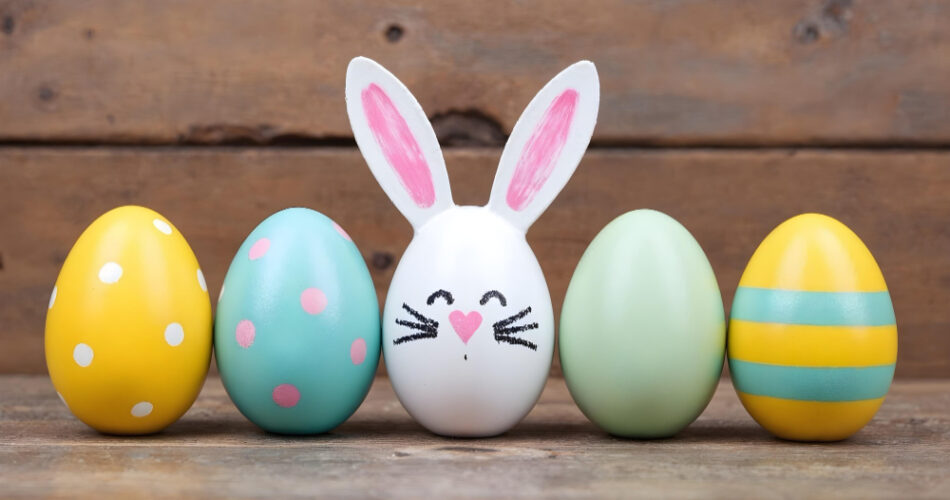
The origin of Easter eggs can be traced back to ancient pagan traditions, which were later incorporated into Christian celebrations. While the Easter Bunny and Easter eggs have roots in pre-Christian European folklore.
The custom of associating a rabbit or bunny with Easter arose in Protestant areas in Europe in the 17th -19th century. This was seen as a Protestant rejection of Catholic Easter customs.
The Story of the word “Easter”
St. Bede the Venerable – an 8th-century monk, scholar and author – wrote that Easter derived from Eostre, a Germanic goddess of dawn associated with fertility and celebrated during the Spring Equinox.
Bunny Origins
The Easter Bunny is folk character called “Osterhase” or Easter hare, originating in 16th-17th century German Lutheran folklore as a spring visitor that judged children’s behavior and laid eggs.
The bunny story is linked to the Anglo-Saxon goddess Eostre and spread to America via German immigrants in the 1700s, where it became commercialized.
Easter Egg Origins
According to early adopters, easter eggs symbolized fertility and rebirth in ancient pagan spring festivals across Mesopotamia, Egypt, and Persia, often dyed in various colors or offered for harvests.
Christians adapted gradually, and some of the early church saw them as symbols of the resurrection. To them, Red-dyed eggs specifically evoked Christ’s blood.
The Donkey
The donkey, unlike the bunny, is not folklore. It is very biblical. It carried Jesus into Jerusalem, symbolizing humility and peace.
His ride fulfilled the prophecy in Zechariah 9:9: “See, your king comes to you, righteous and victorious, lowly and riding on a donkey.”
Modern Easter In Nairobi.
Bunnies and eggs are NOT originally Christian symbols. They are European traditional folk cultures.
We now have chocolate eggs, Easter baskets, and cartoon bunnies, which are largely driven by retail, Western media influence, and the consumerist culture.
Easter today is way less about religion and more about seasonal marketing and fun – just like Christmas.
Why adopt elements from pagan traditions?
Christians are accommodating and very conforming compared to other religions in the world.
Even today most Christian groups practice Syncretism, which is the blending of diverse, often contradictory, belief systems, cultures, or philosophies into a new system.
How did Syncretism help?
✔ It eased religious conversion rates when the maiming and killing of pagans ceased to work
✔ It helped avoid alienation of new believers who were deep in local customs
✔ Total rejection was seen as impractical since traditional customs were deeply rooted
✔ It’s easier to integrate culturally fun traditions
Easter is really a hybrid holiday; Christian in meaning but layered with older fertility and springtime rituals.
As you enjoy your Easter this season, the question is not whether the holiday is pagan – the real question is: how many eggs have you had? When was the last time you saw a hare?
and,
What about the donkey?
and,
How have you incorporated your African culture into it?
Enjoy, and be safe. Jesus may rise on Monday, but you won’t.