
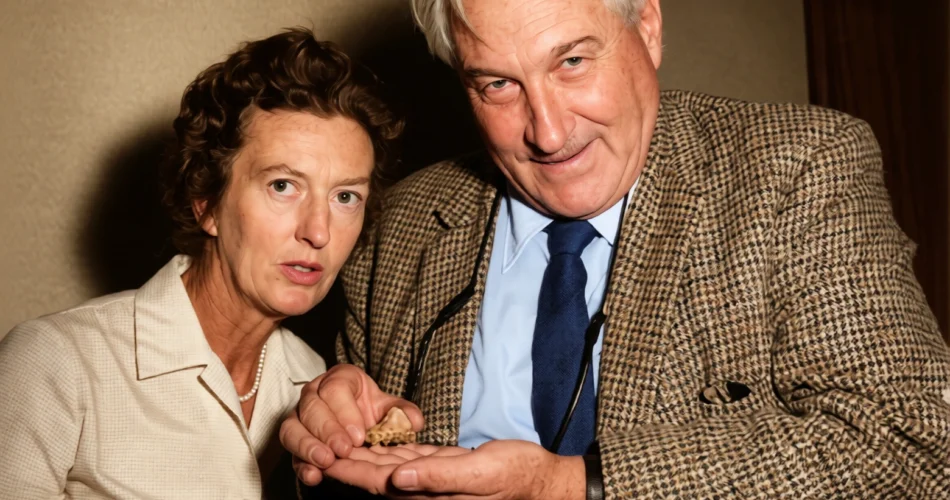
This article, explores Louis Leakey life as a Kikuyu, cultural Integration, Fieldwork, and his Kikuyu Advocacy.
His full name was Louis Seymour Bazett Leakey. Louis Leakey was born of English missionary parents in 1903 in a tiny Kikuyu village in Kenya.
His Parents:
His parents were Harry and Mary Bazett Leakey, who were English missionaries in Kikuyu Country. Mary left Victorian England to volunteer with the Church Missionary Society in East Africa, inspired by David Livingstone, and Harry Leakey had come to Kenya to establish a Church Missionary Society mission on a 16 acres land in Kabete.
⛪The Church today is the home to ACK St. Paul’s Mother Church, Kabete (Anglican Church of Kenya, Diocese of Mt. Kenya South), along with Mary Leakey Girls’ High School.
🔵 Harry was nicknamed Giteru “Big Beard” by the local Kikuyu, He ran the mission school, mediated community fears during World War I, and worked to maintain respectful relationships with local Kikuyu elders.
🔵 They raised their family in a mud-and-thatch hut – where Louis was born during a tropical rainstorm in 1903 – before later building a stone bungalow.
🔵 They had created an environment where the Kikuyu language was spoken in their home as naturally as English, laying the foundation for Louis’s upbringing as a “white Kikuyu”.
Leakey’s Life As A Kikuyu
Although he went to study in England, he considered himself Kenyan, and when Kenya became independent after World War II, he declared himself a Kenyan.
➤ Before going to England in his youth years for study, he was raised on the guidance of Kikuyu elders and at age thirteen, Leakey qualified for initiation into a Kikuyu warrior age-grade after mastering tribal customs, ways, and essential physical skills.
➤ He became a recognised member of the Mũkanda initiation age-group and was initiated into the tribe, and since he had a sharp eyesight, the chief bestowed upon him the Kikuyu name Wakaruīgī, meaning “Son of the Sparrow Hawk” in an initiation process that took 4 days.
➤ During the induction, he took an oath to contribute the wega or good of the tribe and to protect confidential cultural knowledge.
➤ Leakey built his own thingira on his family’s property. He cleared land, cut tree poles, thatched roofs with banana leaves, and hosted traditional house-warming celebrations for his fellow builders.
➤ 1934, he paid the requisite fees and was admitted as an elder of the first or junior grade, and in 1938 he became an elder of the second grade. He was hereby entitled to information that he could not otherwise be given.
➤➤ In 1937, Leakey felt that when the present generation of elders died, much of the information would be lost for ever.
Leakey and Kikuyu Affairs
🔶 During World War I, he assisted local families by translating letters written by Kikuyu carriers serving in the war zone.
🔶 He represented tribal interests on government land tenure committees.
🔶 When Chief Koinange traveled to London to consult with a Joint Committee of Parliament on East African territories, Leakey served as an interpreter for Chief Koinange during parliamentary consultations.
🔶 Throughout the war crisis, Leakey worked as an interpreter, negotiator, and defender of tribal demands.
🔶 Leakey systematically gathered, checked, and verified the mass of detailed information provided by the elders from various sources.
🔶 He stayed at Kiambaa near Nairobi with Chief Koinange, where he formally negotiated with local councils of elders and was provided with designated informants to provide him with detailed cultural information.
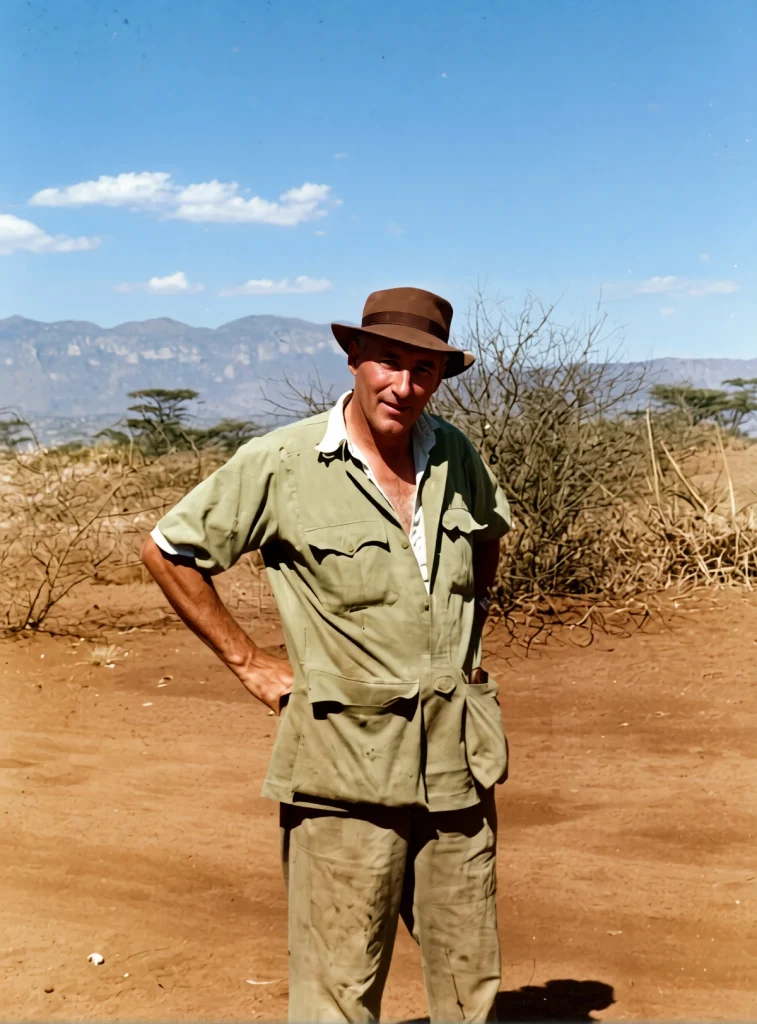
“We call Louis the black man with the white face, because he is more African than European. In all ways we regard him as one of ourselves”
^ Chief Koinange description of Leakey in British Parliament.
From The book The white Kikuyu,
How Louis Leakey Was Able To Research Extensively On the Southern Kikuyu?
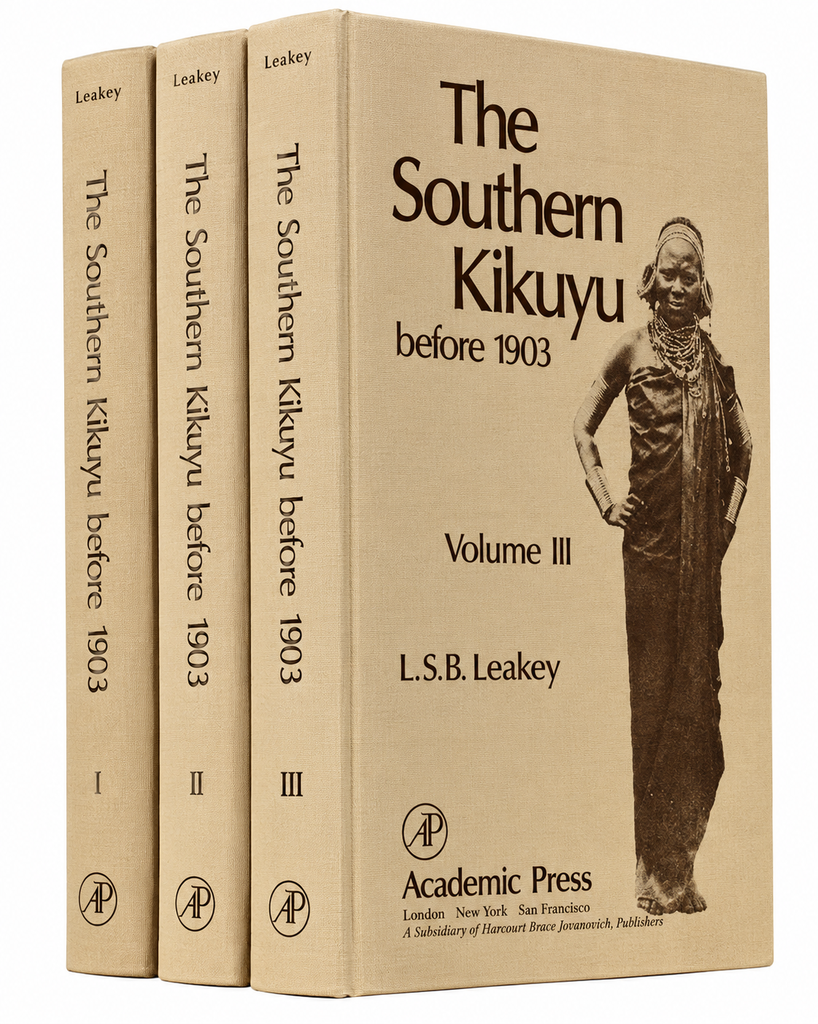
Leakey’s research resulted in a comprehensive three-volume manuscript detailing traditional Kikuyu social organization, land tenure, agriculture, industry, and customs. The resulting three volume work is titled The Southern Kikuyu before 1903.
This was enabled by:
- Living among the Kikuyu and learning their language and ways.
- Working with elders and earning their trust.
- Checking the facts and oathing to keep certain Kikuyu things secret.
Why Did Leakey Want To Write About The Kikuyu?
A) Leakey recognized that rapid social change threatened to permanently alter or erase Kikuyu traditional customs. He wanted to document traditional Kikuyu customs before European contact altered them beyond recognition.
Leakey also pointed out – in the southern Kikuyu before 1903 manuscript- , that the ancient Britons were living in much the same state of culture as themselves when the Romans brought their civilisation to Britain, and that, the descendants of the ancient Britons, knew little about the customs of their forefathers because the Romans had not left any detailed accounts of ancient British law and custom.
B) Leakey sought to record a comprehensive, in-depth account of the Agĩkũyũ people’s traditions, social structures, and way of life as they existed before and during the onset of European influence.
C) Therefore, Leakey having been born and raised within the community, he held a lifelong connection with the tribe. The elders trusted him with their memories and oral histories, allowing him to document their heritage from an insider’s perspective.
❖❖❖
Why Louis Leakey’s Work Still Matters to Us
I think L.S.B. Leakey did a remarkable job documenting our Kikuyu culture, traditions, beliefs, and ways of life at a time when much of this knowledge was passed down orally from one generation to the next.
His work gave future generations a written record of a culture whose history might otherwise have been harder to piece together, especially because of the colonial disruption that came and banned most traditions like Ituika and night dances.
His memory lives on through his books, particularly The Southern Kikuyu Before 1903, which remains a valuable reference for anyone interested in understanding our heritage.
For many of us millennials, his writings offer a window into the lives, customs, and beliefs of our ancestors, giving us somewhere to start when we want to learn more about who we are and where we come from. Of course, his work reflects the perspective of the man who documented these traditions, and it is worth reading alongside the knowledge preserved by our own elders and communities.
Still, I appreciate the effort he made to preserve so much of our cultural history for generations like ours to revisit, rather than relying solely on accounts from people born after the Mau Mau War and after European invasion which undoubtedly diluted the customs and ways of life of the Agikuyu.
Most of the men teaching traditions today – with the current argument about who is correct – were born around 1950+ and therefore cannot have the actual information about the practices, since they did not practice them themselves, only accounts of people who had participated as adults in the ceremonies and social life of the 1880s and 1890s could give a clear picture of their accounts to Mr. Leakey.
Having read this book myself, it is indeed a straightforward description of Kikuyu customs, without a critical analysis or attempts to compare and contrast the customs with those of other tribes.
If you’re curious about the Kikuyu customs, grab it and read it for yourself!