
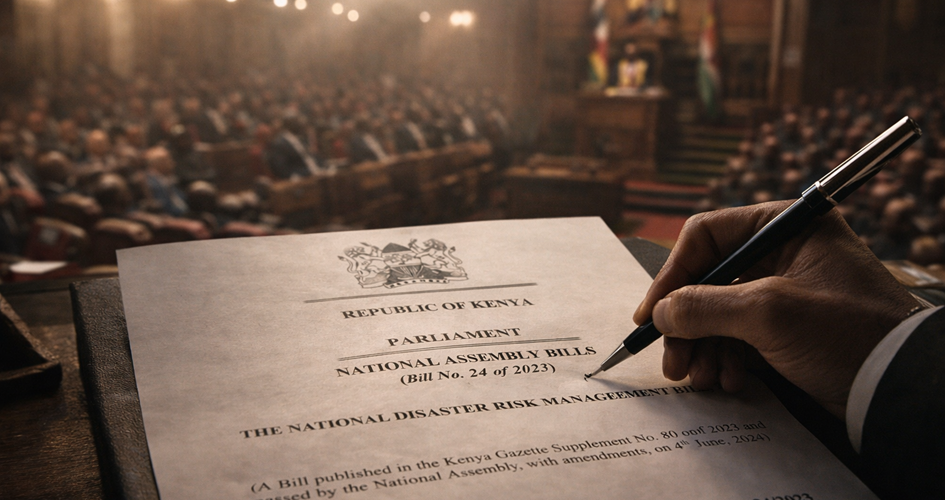
As we were bickering… about who should be blamed for what disaster… and wondering about the government’s slow response at Utumishi…
Three major bills were signed into law:
1. The National Disaster Risk Management Bill, 2023
2. The Forest Conservation and Management (Amendment) Bill, 2025
3. The Equalisation Fund Appropriations Bill, 2025
Let’s take a look at the National Disaster Risk Management Bill, 2023
This law formalizes the coordination of prevention, mitigation, and recovery activities across the proposed levels of government.
This bill directs the creation of:
The National Disaster Risk Management Authority:
- This will be a central body responsible for supervising relief efforts and coming up with safety strategies.
The County Disaster Risk Management Committees
- They’ll ensure that local governments will effectively respond to catastrophes at the county level.
This law defines the legal powers of these organizations, from the declaration of a national state of disaster to the management of involved funds.
Benefits
➢ This law gives both the national government and county governments their own disaster-response bodies; this makes it easier to coordinate.
➢ The law focuses on the stages of disaster management, including reducing risks, preparing for emergencies, and responding when disasters occur.
➢ This law requires special protection and support for women, children, people with disabilities, and older persons during disasters. 😒🙄
➢ The law brings the creation of a digital database to keep records of disaster risks, experts, and past disasters, so we can plan better for the future.
➢ The law creates a way to tell whether a disaster will be handled by the county or the national government. It makes it clear how resources should be shared and who is responsible.
Potential Risks…
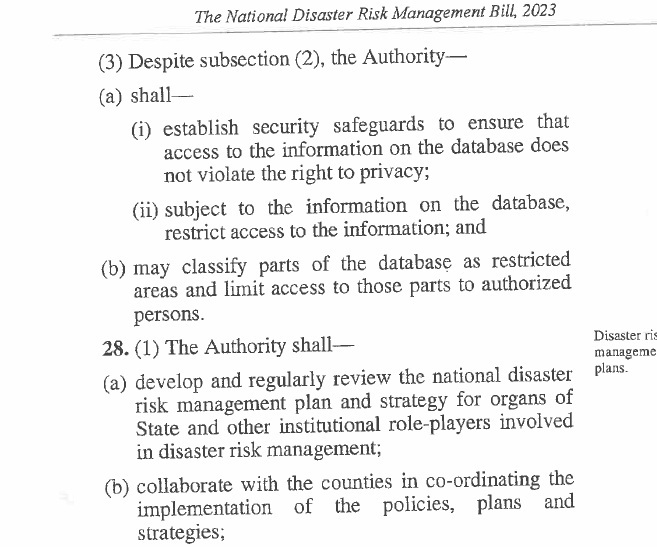
⛔ This law allows the “authorities” to restrict access to information held in its database if it believes disclosure would compromise the integrity of operations.
This law allows the “authorities” to restrict access to information held in its database if it believes disclosure would compromise the integrity of operations
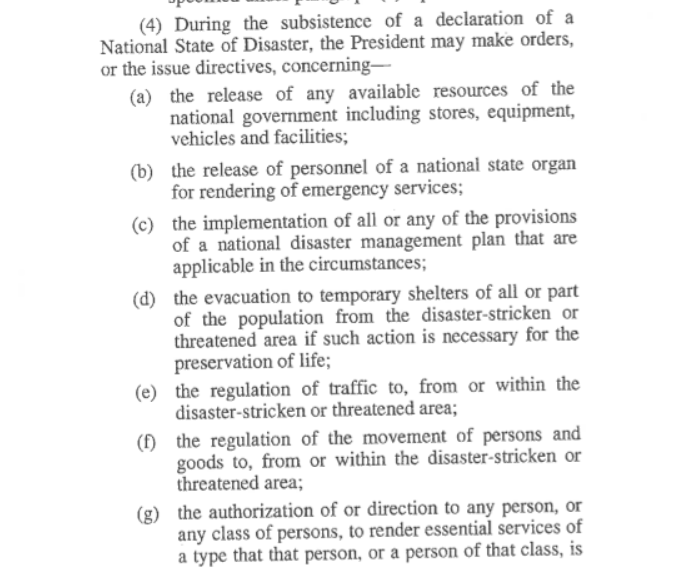
⛔ The President is granted extensive powers to issue orders concerning the regulation of traffic, movement of persons, and the distribution of essential goods, which significantly impacts civil liberties.
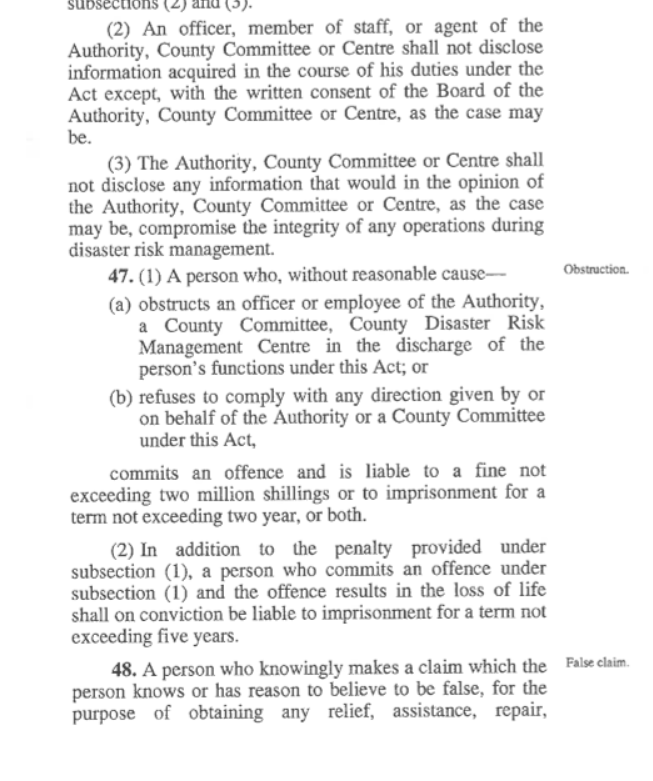
⛔ The bill introduces heavy fines and imprisonment for “obstruction” or “false alarms.” like obstructing an officer can lead to a fine of 2 mil or two years in prison; it increases to 5 yrs if the offense results in loss of life.
⛔ The President can authorize or direct any person to render essential services during a disaster. While the Bill mentions “reasonable compensation,” the mandatory nature of this provision is debsatable.
⛔ This rule protects staff from being personally blamed; it’s meant to protect staff acting in good faith. There is concern that it could be used to excuse negligence or poor decisions.
⛔ The multiple new administrative layers 1. National Authority, 2. County Committees, and 3. County Disaster Risk Management will require funding and will lead to more bureaucratic overlaps.
What do you think?

Lemme know below.