
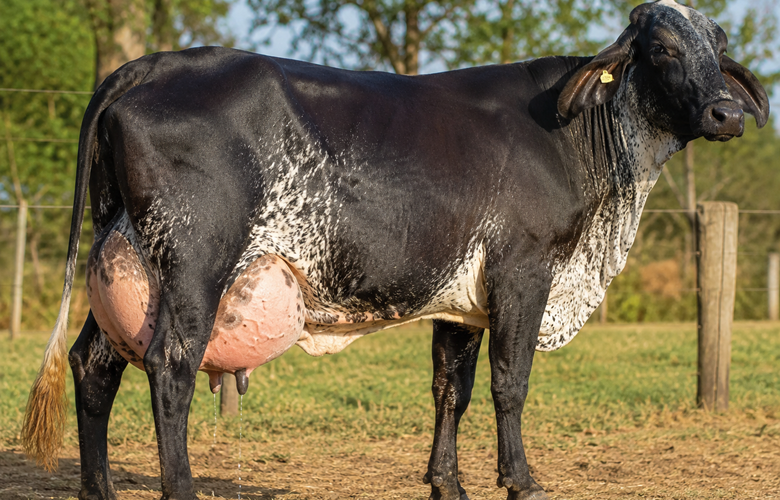
Recently, Facebook, TikTok, and WhatsApp have been flooded with eye‑catching headlines about a so‑called Girolando cow, with countless flashy young men presenting themselves as breeders or sellers – some quoting prices as high as Kes 800,000.
What Exactly Is This Cow, Where Did It come from, and Is It Truly the Holy Grail for Your Dairy Farm? Let’s Break down the Facts.
➠ The Girolando cow is a synthetic dairy breed that originated in Brazil during the 1940s. It was created by crossbreeding two cattle lineages to combine high milk production with climate resilience.
➠ It is globally regarded as one of the finest, if not the absolute best, choices for open-pasture or low-infrastructure farming.
The Girolando genetic profile is 5/8 Holstein and 3/8 Gir.
- The Gir Component (3/8) lineage originates from the Indus Valley in India. A Bos indicus (Zebu) subspecies, which evolved distinct traits like a fatty hump, floppy ears, and high resistance to heat, tropical diseases, and ticks.
- The Holstein Component (5/8)lineage originates from Europe, specifically the Netherlands and Germany. It belongs to the Bos taurus – non -humped subspecies, traditionally bred to produce massive quantities of milk, though they lack natural heat tolerance.
🐄Notably, both parent lineages share a single wild ancestor: the Aurochs – Bos primigenius – a wild ox species that roamed Eurasia and North Africa before going extinct in 1627.
Why the Breed Was Made:
Brazilian farmers faced a challenge in 1940s, where pure European Holsteins suffered heavily from heat stress and tropical parasites, which caused low milk yields. By crossing them with the heat-hardy Indian Gir, they created a “super-cow” which adapted to tropical environments. The Girolando.
This successful crossbreed is responsible for roughly 80% of Brazil’s total milk production today.
🐮The Current Status of the Girolando Cow in Kenya:
➠ Pure Girolando genetics arrived in Kenya as frozen embryos and semen straws and not as live-shipped adult cows.
➠ A partnership between the Brazilian Embassy and local livestock companies introduced live Girolando embryos in Kenya, and the breed’s formal introduction took place in March 2025.
➠ This partnership officially saw the importation of the first major consolidated batch of 350 pure Girolando embryos directly from Brazil into Kenya in 2025.
➠ Makongi Farm in Eldoret serves as the primary hub for pure Girolando breeding via advanced IVF and embryo transfer.
➠ High-quality Girolando semen straws are widely distributed commercially through local breeding catalogs such as CKL Africa for crossbreeding with existing local Holstein-Friesian or Zebu herds.
➠ There are currently NO commercial farms in Kenya importing adult, live Girolando cows directly from Brazil due to strict phytosanitary rules, high costs, and logistics.
However, since these cows are available in large-scale farms in countries like Uganda, Rwanda, and Tanzania, they are allowed to be shipped across EA borders under a specific protocol.
Prices?
According to the Kenya Agricultural and Livestock Research Organization (KALRO) Naivasha farm, prices for locally bred Girolando cattle vary depending on age, genetics, and production stage.
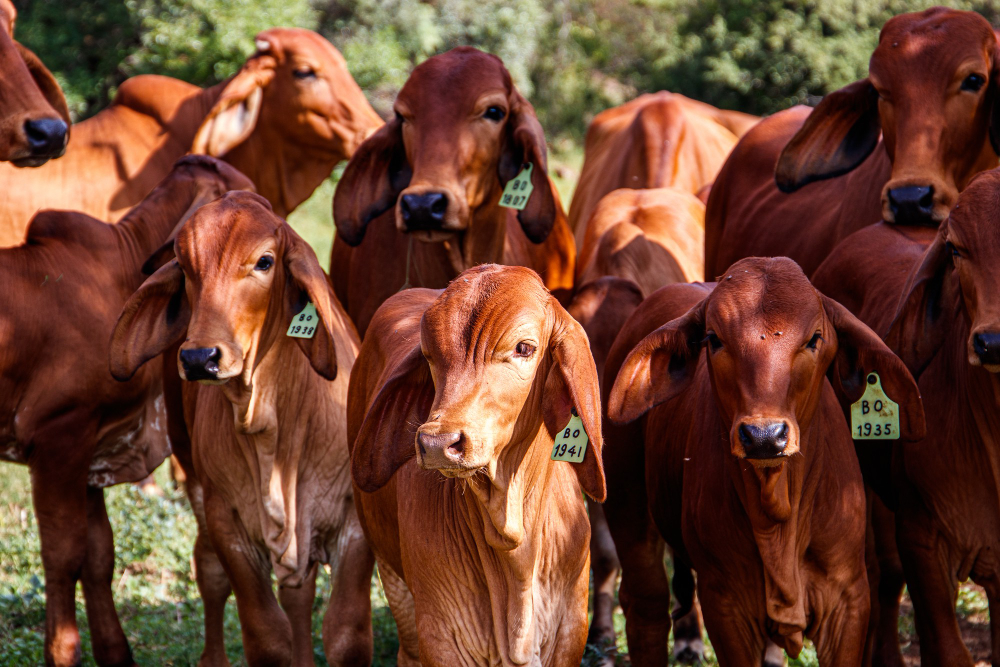
Thinking of Shipping a Cow?
☒ Shipping live cattle over long distances requires hiring a specialized customs broker. It also demands chartering dedicated, well-ventilated spaces that conform to International Air Transport Association (IATA)Live Animals Regulations.
☒ Due to these steep costs, importing a single live cow is rarely done; it is only financially viable when shipping a large group of animals by sea.
Locally, you can buy from Karlo. A government facility will ensure you don’t fall for the scam risks involved in other private farms here.
Authorized Channels Distributing The Specific Genetics:
★ Makongi Agri Ltd – sister company, Indicus East Africa Ltd
★ CKL Africa Ltd (Coopers K-Brands)
★ Worldwide Sires East Africa – Global Livestock Genetics Importer.
To Avoid Scams:
⚠️ Don’t buy cows you haven’t seen, and which you haven’t read the paperwork certifying they are indeed the said breed.
⚠️ Don’t send money to “book” because they’re “running out”. Please check Karlo prices here
⚠️ Contact Karlo or Makongi farm for directions and recommendations, or visit them; avoid online bots or persons.
⚠️ Given that the embryo breeding program only launched last year, these calves are not yet mature. Consequently, online sellers have minimal data to back up the wild claims of an 80-liter daily milk yield.
⚠️ Verify the breeds before buying from individual sellers through breeding records, milk records, and official documentation.
⚠️ If they say they imported from East Africa, ask for import permits, veterinary documentation, and milk records.
Sources
Sources:Kenya Agricultural and Livestock Research Organization (KALRO), Brazilian Girolando Breeders Association, Brazilian Embassy in Kenya, CKL Africa, The Cattle site, The standard news